Saturday 24 / January / 2026
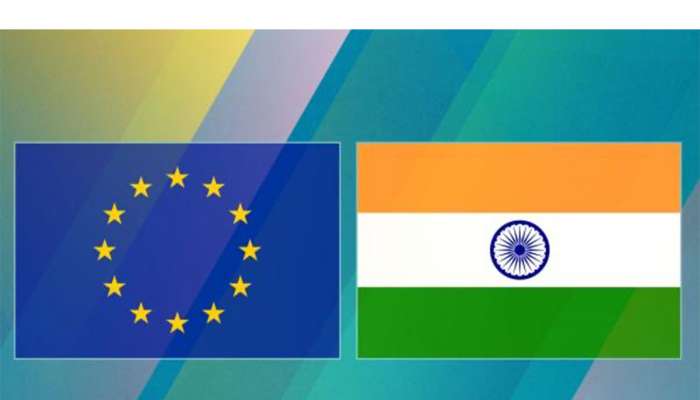
India and the European Union are expected to announce the conclusion of long-running negotiations on a free trade agreement on Tuesday, according to Indian and EU government sources. The deal would pave the way for lower tariffs on European cars and wine while expanding market access for Indian exports such as electronics, textiles and chemicals.
The announcement may come after Indian Prime Minister Narendra Modi meets European Council President Antonio Costa and European Commission President Ursula von der Leyen, who are set to co-chair an India–EU summit during their visit to India from January 25 to 28.
Negotiations were revived in 2022 after a nine-year hiatus and gained momentum last year as global trade tensions intensified.
If finalised and ratified by the European Parliament a process expected to take at least a year the pact would significantly boost Indian exports, including textiles, jewellery and manufactured goods, an Indian government source said.
In return, India would gradually lower tariffs on selected European products, particularly automobiles and alcoholic beverages, though negotiators are still working to bridge gaps on sensitive sectors such as auto imports, EU officials said.
Some agricultural products have been excluded from the talks, according to Indian trade officials.
The agreement comes amid a reshaping of global trade alliances following renewed protectionism by the United States. In August, U.S. President Donald Trump doubled tariffs on Indian imports to as much as 50%, among the highest globally.
Against this backdrop, both India and the EU have accelerated trade diplomacy. The EU recently finalised a landmark deal with South America’s Mercosur bloc and has struck agreements with Indonesia, Mexico and Switzerland. India, meanwhile, has concluded trade pacts with Britain, New Zealand and Oman.
At the World Economic Forum in Davos, von der Leyen said the EU was close to concluding the India deal, though some work remained.
Beyond tariffs, New Delhi has raised concerns over non-tariff barriers, particularly the EU’s carbon border levies on imports such as steel, aluminium and cement. Industry experts say there is limited room for flexibility on these measures.
Despite regulatory hurdles, analysts argue duty-free access to the EU could help Indian exporters offset losses in the U.S. market. India currently holds a 5–6% share of the EU’s $125 billion annual textile imports, compared with China’s roughly 30%.
Autos, electronics, pharmaceuticals, chemicals and textiles are expected to be among the biggest beneficiaries of the deal, according to Jefferies.
Bilateral trade between India and the EU reached $136.5 billion in the 2024/25 fiscal year ending in March, making the 27-nation bloc one of India’s largest trading partners. Indian and EU officials declined to be identified as discussions are ongoing, and India’s commerce ministry has not yet commented.
An India–EU free trade agreement would mark more than a commercial breakthrough it would signal a strategic recalibration in a fragmenting global trade system.
With U.S. tariffs rising and geopolitical tensions spilling into economic policy, both sides are seeking reliable, rules-based partners. For India, closer trade ties with the EU reduce exposure to U.S. protectionism while supporting its ambition to become a global manufacturing hub. For Europe, India offers a fast-growing market and a democratic counterweight to China in Asia.