Tuesday 02 / June / 2026
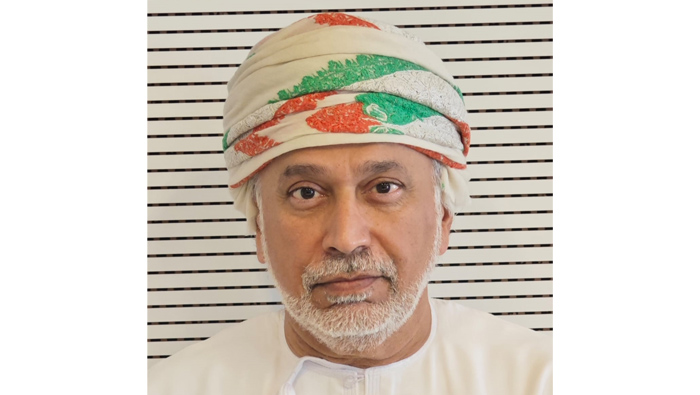
The world is currently engulfed in a firestorm. Since ‘Operation Epic Fury’ began on February 28, 2026, the ‘logic of force’ has once again replaced the language of diplomacy. Yet, in the middle of this chaos, two nations separated by thousands of kilometres—the Kingdom of Spain and the Sultanate of Oman—are emerging as the unlikely moral anchors of a turbulent world. Together, they
are forming what can only be described as a Madrid-Muscat Axis of Peace.
The Omani Doctrine: Right Above All
Just last week, I had the honour of meeting with His Excellency Sayyid Badr bin Hamad Al Busaidi, the Foreign Minister of Oman. His message was clear, unwavering, and consistent with Oman’s long history: Oman stands with what is right, regardless of who is involved.
This is not a political pivot; it is the Omani soul.
While many nations have succumbed to hypocrisy—condemning one side while ignoring the escalations of the other—Oman has remained steady.
As Sayyid Badr recently noted, the real aim of this military escalation isn’t just security; it is a dangerous attempt to reshape our region while ignoring the fundamental necessity of a Palestinian state. Oman knows that true peace cannot be built on the exclusion of others
.
Spain: The European Voice of Conscience
The other half of this axis lies in Madrid. In a move that has stunned the West, Prime Minister Pedro Sánchez has revived the spirit of “No a la Guerra” (No to War).
By strictly refusing to let the US and Israel use the Rota and Morón airbases for strikes against Iran—despite threats of trade sanctions from President Trump—Spain has proven that sovereignty is more than just a flag. It is the courage to say “No” to an unjustifiable war.
Spain’s decision to withdraw its ambassador from Israel on March 11, 2026, was a bold salute to international law.
They have seen through the thin veil of “protection” provided by foreign bases and recognised that true stability cannot be achieved through the destruction of a neighbour.
The Shadow of the Unthinkable
The current conflict flirts with a darkness we haven’t seen in decades. As reports surface of “bunker-busting” munitions shaking the earth, rumours of tactical atomic studies have begun to cloud the headlines.
Russian President Vladimir Putin has already issued a stark warning: Any strike that leads to a “radiological catastrophe” will cause the global security order to go haywire. When the world begins discussing the “unthinkable,” the need for the Madrid-Muscat approach becomes even more urgent.
We are no longer just talking about political borders; we are talking about the survival of the global environment and the safety of millions of families across the Gulf and the Mediterranean.
Neighbours, Not Strategic Targets
For too long, the West has viewed the Gulf as a collection of military bases. They fail to see what we see: That we share more with Iran than just a coastline.
To the outside world, the water between us is a strategic ‘choke point’. To us, it is a family reunion. Our tribes, our surnames, and our very DNA do not stop at the maritime border. This is not just true for some Omani families; it is the reality of the entire Gulf.
From the communities in the UAE and Bahrain to the deep-rooted merchant families of Kuwait and Qatar, the ‘other side’ of the Gulf is not a foreign land—it is our ancestry. We share the heritage of the Falaj irrigation systems that water our lands and the ancient trade routes that built our ports. We share food, music, and traditions that have outlasted every empire.
When bombs fall on Iranian heritage sites like the Golestan Palace or the historic streets of Isfahan, they aren’t just hitting targets; they are erasing the shared memory of our civilisation. You cannot bomb a neighbour without wounding your own family.
The billions of dollars spent on foreign bases have been revealed as tools for a different agenda. The true security of the Gulf lies in a future where Iran is a partner, not a target. We must stop viewing regional conflicts like a football match, cheering for ‘hits’ and ‘strikes’. Instead, we must cheer for the realisation of a two-state solution and the restoration of diplomatic sanity.
A New Era of Leadership
While rumours swirl regarding the health and future of those who sparked this fire, the true focus must remain on the ideology of war. We need a new generation of leadership that accepts UN resolutions rather than bypassing them.
The Madrid-Muscat Axis of Peace represents a rejection of the status quo. Spain has set a precedent that I believe other European nations will follow. If we want a better world for our children, we must stop funding destruction and start investing in the ‘Right’ that Sayyid Badr so eloquently defends.