Saturday 27 / December / 2025
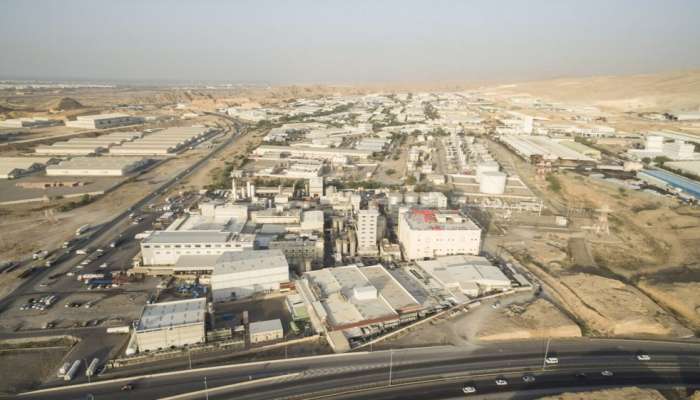
Muscat: The Omani industrial sector is witnessing rapid progress across legislative, production, and investment fronts, as the Sultanate of Oman has succeeded in shaping a renewed industrial identity that places manufacturing at the core of national economic policies.
This transformation has strengthened Oman’s position on the global economic map and reinforced its role as a competitive industrial hub.
The industrial renaissance has been marked by the launch and inauguration of several major strategic projects, including the Karwa Motors factory in the Duqm Special Economic Zone, the Sanvira Carbon plant in Dhofar Governorate, as well as the Duqm Refinery and the Liwa Plastics Industries Complex. The sector also witnessed the completion of construction of the United Solar factory for polysilicon production, supporting the localization of supply chains linked to the solar panel industry.
In the field of pharmaceutical security, factories operated by Flex, Dhofar, and Menagen pharmaceutical industries were launched. These projects have contributed to increasing industrial output, transferring advanced technologies, localising supply chains, and attracting national talent.
Economic indicators reflect the scale of the sector’s transformation, with industrial output recording an annual growth rate of 7 percent. Industrial exports exceeded OMR7 billion by the end of 2024, while foreign direct industrial investments reached approximately OMR2.8 billion. The number of Omanis employed in the industrial sector rose to more than 57,000 workers.
At the international level, the Sultanate of Oman’s industrial progress has been praised by the United Nations Industrial Development Organization (UNIDO), which described Oman as one of the emerging industrial countries.
UNIDO commended the acceleration of high-tech industries and the development of advanced value chains, noting that the Industrial Strategy 2040 represents a model for harnessing innovation and localizing technology.
Dr. Saleh bin Said Masan, Undersecretary of the Ministry of Commerce, Industry and Investment Promotion for Commerce and Industry, affirmed that the next phase, coinciding with the launch of the Eleventh Five-Year Plan, will focus on smart manufacturing and the adoption of Fourth Industrial Revolution technologies to ensure sustainability and transform the sector into a key engine of economic diversification.
Meanwhile, Eng. Khalid Salim Al Qasabi, Director General of Industry at the Ministry of Commerce, Industry, and Investment Promotion, reported record growth in industrial license applications, supported by enabling programmes such as Itqan and the Smart Production Factories initiative. He noted the activation of new tools, including the Industrial Observatory and the Tasnee platform, to regulate sector procurement and enhance local content.
Regarding downstream industries, Engineer Said Mohammed Al Masoudi, CEO of Sohar Aluminium, explained that the company has established a strong base for downstream industries by attracting high-quality investments and raising Omanisation rates to record levels, thereby increasing local added value to the national economy.
For his part, Engineer Omar Al Balushi, CEO of the Omani Aluminium Rolling Company, stated that the past five years have represented a pivotal phase for the Omani industrial sector, marked by qualitative transformations and tangible achievements that have strengthened Oman’s position as a promising regional industrial center. He emphasized that supportive government policies and continuous institutional backing have driven growth, particularly in the aluminum sector, which has recorded rising production and export volumes alongside expanded operational capacities and infrastructure.
Additionally, Nasser bin Sulaiman Al Azri, CEO of Vale Oman, affirmed that the Sultanate of Oman provides an ideal environment for long-term industrial investments, supported by clear competitive advantages. He noted that the company continues to invest annually in developing advanced industrial capabilities serving global steel markets and is implementing expansion plans to further strengthen its operations in the region.