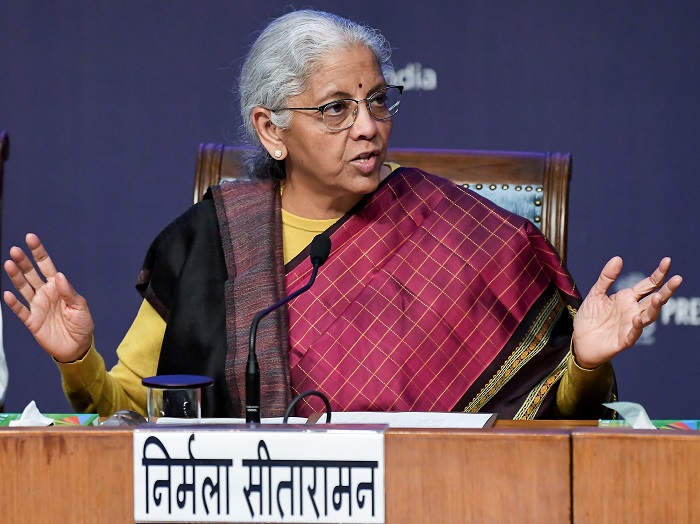
MUSCAT: There is finally something to cheer about in India’s Union Budget 2026 for Indians living in Oman.
During her Budget 2026–27 presentation, Indian Finance Minister Nirmala Sitharaman proposed several key reforms aimed at non-resident Indians (NRIs), a move welcomed by the expatriate community living in Oman.
“From raising limits of investments in Indian equity markets to easing real estate transactions and excluding specified NRI businesses under presumptive taxation from the applicability of Minimum Alternate Tax, there are several proposals that directly benefit NRIs,” said R. Madhusoodanan, a Muscat-based financial expert.
He added, “Budget 2026 has opened its doors wider for NRI investors. It strengthens long-term foreign capital, improves market liquidity and aligns Indian equities with global portfolios through expanded limits, simpler rules and a more stable investment framework.”
Speaking to Times of Oman, Madhusoodanan noted that the Budget is growth-oriented with a strong focus on overall economic development, and that several measures have been particularly welcomed by the NRI community in Oman.
“These include an increase in the aggregate investment limit for Persons Resident Outside India (PROIs) to 24 percent, removal of the requirement for a Tax Deduction Account Number (TAN) for property sales by NRIs, a foreign asset disclosure amnesty, and a reduction in Tax Collected at Source (TCS) on foreign travel, education and medical expenses from 5 percent to 2 percent,” he said.
He also pointed out that tax holidays extended until 2047 for data centre and cloud services for foreign investors are seen as a significant boost to foreign investment.
On the domestic front, the Budget emphasised renewed focus on key sectors including manufacturing, MSMEs, agriculture, textiles, pharmaceuticals, artificial intelligence, technology, healthcare, sports, tourism and women-led enterprises. Substantial allocations for infrastructure development were another highlight.
“The announcement of a high-level committee on banking sector reforms is a welcome move and aligns with the government’s vision of transforming India into a developed nation by 2047. Containing the fiscal deficit at 4.3 percent of GDP also reflects the government’s commitment to fiscal discipline,” he added.
However, Madhusoodanan noted that some long-standing expectations of migrant Indians were not addressed.
“Migrant Indians had hoped for the introduction of comprehensive social security schemes, rationalisation of income-tax rules, access to long-term government small savings schemes, and measures to curb excessive airfares during festive and holiday seasons. Unfortunately, these were not considered,” he said.