Wednesday 02 / September / 2026
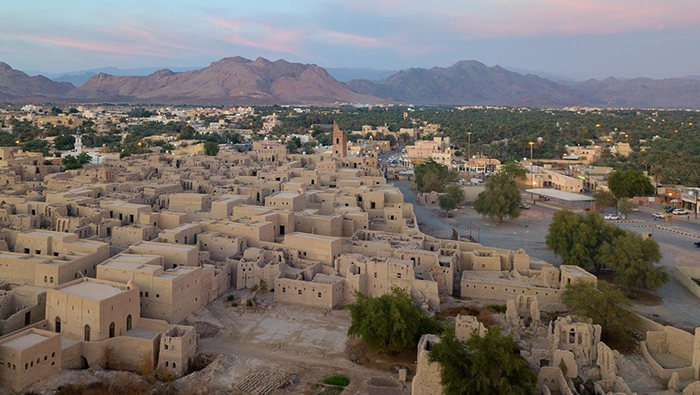
Nizwa: Oman's ancient quarters are experiencing a renaissance, with intensifying restoration and development efforts transforming these heritage sites into vibrant tourism destinations that seamlessly blend authenticity with contemporary renewal. The narrow alleyways and traditional mud-brick dwellings, adorned with centuries-old architectural details, now serve as living narratives of Omani society, drawing visitors from across the Sultanate of Oman and beyond into immersive cultural experiences.
This transformative movement represents a synergistic collaboration between the Ministry of Heritage and Tourism and community stakeholders committed to preserving cultural identity while revitalising the nation's urban heritage for economic and tourism development.
Asma Hilal Al Kharusi, Acting Director of Castles, Forts, and Historical Sites at the Ministry of Heritage and Tourism, emphasised: "The Ministry is dedicated to ensuring Oman's historic quarters evolve into dynamic, living spaces that authentically reflect the depth of Omani identity and heritage, rather than remaining static architectural monuments. Our strategic approach balances the preservation of historical and architectural integrity with activating these spaces as engines for tourism and economic growth."
She added that the Ministry's comprehensive strategy encompasses documentation and protection of historic quarters, implementation of restoration projects adhering to traditional urban fabric methodologies, and promotion of heritage building investments across diverse tourism and cultural applications—including heritage inns, traditional cafes, and artisan spaces for crafts and creative industries. This multifaceted approach breathes new life into these sites while integrating them into contemporary daily experience.
"We are concurrently developing infrastructure and visitor services, including interpretive pathways, informational signage, and tourism amenities, ensuring an integrated experience that preserves each location's essential character while enhancing its appeal," she said.
She pointed out that these coordinated efforts aim to position Oman's historic quarters as sustainable destinations harmonising tradition with modernity, generating economic opportunities for local communities, stimulating tourism activity, and amplifying heritage's contribution to national development.
Al Hamra stands prominently among recently revitalised historic quarters. Sultan bin Saif Al Abri, a member of the Al Hamra Development Civil Committee, described the quarter's distinctive character: "Al Hamra occupies a unique mountainside position overlooking the agricultural oasis, with the Al Hamra Falaj flowing through—an integrated scene exemplifying traditional Omani architectural harmony and the remarkable ingenuity of our ancestors in adapting to and harnessing the natural environment."
The civil committee, established to oversee the Wilayat of Al Hamra's development, launched its initiatives in 2014 with restoration of the Ras irrigation channel, which manages water distribution throughout the agricultural oasis adjacent to the historic quarter.
Subsequent projects rehabilitated over 6,000 metres of agricultural pathways connecting the quarter to farmlands, paved with traditional stone and concrete. "These improvements have significantly enriched the visitor experience, enabling cycling excursions, tourist electric vehicle tours, and horse-riding activities while promoting community wellness through scenic walking routes traversing both the historic quarter and agricultural oasis," Al Abri explained.
He commended sustained governmental commitment to transforming these quarters into living tourist attractions, noting how relevant authorities actively supported committee initiatives by providing essential equipment and expediting permit approvals. Recently, seating areas and rest stops have been integrated along the enhanced pathways.
Key committee accomplishments include rehabilitation of the Sidra tree arbor at the eastern entrance and restoration of the Al Salaf majlis and Al Sabahat (Sabah Al Na'b and Sabah Al Maghri)—among the quarter's most significant historical landmarks. In 2023, Oman Electricity Transmission Company contributed substantially through installation of 400 solar-powered lamps, illuminating neighborhood pathways and agricultural roads while enhancing aesthetic appeal. Al Abri emphasised that all development initiatives proceeded in close coordination with residents, ensuring broad satisfaction and reinforcing community cooperation.
The committee's strategic vision prioritised establishing essential infrastructure as a foundation for subsequent tourism development, enabling reinvestment in the quarter's abundant natural and heritage assets. This approach has catalysed development of multiple heritage inns, rest houses, and cafes, stimulating ancillary service industries, generating added value, and creating promising employment opportunities. Al Abri noted that the Ministry of Housing and Urban Planning recently completed an urban plan for Al Hamra, establishing development frameworks that preserve authentic urban character while accommodating thoughtful modernisation.
Regarding investment returns within historic quarter environments, Salmeen bin Al Saba' Al Mahrouqi, owner of the Kadam Café project in the Wilayat of Bahla, demonstrated how entrepreneurs successfully blend contemporary luxury with historical ambiance to create distinctive visitor experiences. "These initiatives exemplify the delicate balance between authenticity and modernity," he explained. "Establishing this café in the heart of Bahla Souq “market” was conceived specifically to revitalise traditional markets, capitalising on Bahla's exceptional tourism assets—historic quarters, forts, aflaj, and generations-old traditional industries including pottery, leather tanning, and metalworking."
Al Mahrouqi emphasised: "This development momentum represents a qualitative transformation, stimulating citizen economic participation, encouraging local investment and productive family enterprises, and reanimating quarters once approaching abandonment. It validates the critical importance of preserving our civilizational heritage while demonstrating how historic neighborhoods embodying Omani history can generate sustainable economic returns."
Mohammed bin Abdullah Al Dughaishi, a professional tourist guide, offered perspective on visitor experiences: "In my practice as a guide, I consistently observe that visitors' initial encounters with Oman's historic quarter alleyways evoke wonder and profound appreciation. Tourists quickly recognise they are experiencing not merely preserved structures, but living narratives whose details remain interwoven with contemporary Omani life."