Wednesday 22 / April / 2026
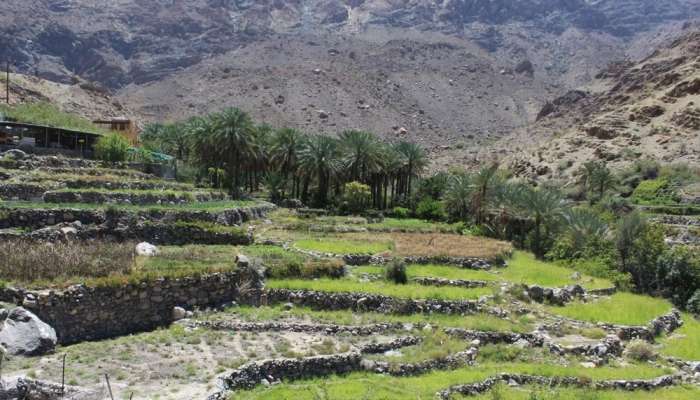
Nakhal: Wadi Bani Harras in the Wilayat of Nakhal, South Al Batinah Governorate, stands as one of the region’s most captivating tourist destinations. Its varied terrain, shaped by striking rock formations that lend it a unique historical and cultural character, enchants visitors and makes it a favoured spot for hiking enthusiasts.
The wadi is home to a cluster of small, picturesque villages with stunning views, including Saqlah, Al Faiq, Al Uwaynat, Al Mubain and Al Hajir. Al Faiq is the largest and most agriculturally active. The villages are scattered across hilltops and along valley edges, sharing similarities with other mountain settlements in how residents harness natural resources — using them in ancient architecture, the construction of aflaj (irrigation channels), fortifications and the layout of agricultural terraces.
Dr. Al Muatasim bin Nasser Al Hilali, Director of the Heritage and Tourism Department in South Al Batinah Governorate, told the Oman News Agency (ONA) that Wadi Bani Harras attracts those interested in geo‑tourism, heritage and cultural tourism, as well as ancient mountain trails. The tourist experiences here serve as a promotional showcase, adding passion and engagement for visitors.
One of the wadi’s most remarkable sights is Bab Al Shas — or Qaws Al Shas (the Shas Arch) — a rock formation sculpted by nature into the mountains lining the wadi’s path. Now renowned as a destination for promotional content and the creativity of photographers, Bab Al Shas is woven into local stories and tales, having served as an important stop for travellers moving to and from the wadi’s villages. The surrounding mountains contain numerous rock formations, cavities, caves and shapes carved by erosion.
He explained that the aflaj of Wadi Bani Harras are the lifeblood of the agricultural environment, representing a unique experience in irrigation methods and water distribution. In Saqlah, two aflaj flow through small channels built according to water volume. They originate from two directions: from the west flows Falaj Al Muhaydith, and from the east Falaj Al Ain. Both irrigate the same crops and plots. Since ancient times, villagers have collected water in basins known locally as Al Lajal — originally built from gravel and sarooj (traditional Omani mortar), later restored with cement — a method common in many agricultural villages for collecting water from springs and aflaj with low flow.
Water distribution in Saqlah differs from other Omani aflaj. Villagers distribute water based on the volume collected rather than on a time‑based system. Water from the aflaj is stored in basins at the top of agricultural terraces. A “half share” entitles the beneficiary to irrigate with all water collected from both the western and eastern aflaj for a single period — the morning. A “full share” — locally known as Maqful — entitles the beneficiary to irrigate over two periods: morning and evening.
He added that the agricultural trail in Saqlah lies on the western and southwestern sides of the village, extending along the falaj channel from its source to the last terrace. Plots near the falaj sources are dedicated to perennial crops such as date palms and citrus, while plots farther from water sources are reserved for seasonal crops, typically grown only in winter or when water levels are higher.
He said that the Al Jami’ Mosque in Saqlah, an ancient place of worship built more than 700 years ago (709 AH), stands below the residential buildings overlooking the agricultural area. Constructed from clay and mountain stones found in the surrounding environment, its location was chosen close to the channel of the village’s eastern falaj, Falaj Al Ain, serving villagers, visitors and those traversing mountain paths.
He explained that tncient tombs scattered along the roads of Wadi Bani Harras — particularly on the path to Saqlah — are archaeological evidence of the valley’s long human history.
He added that tn Al Faiq, crops range from perennials such as date palms, citrus, papaya trees and grapes, to seasonal crops grown according to the season, including onions, garlic, sweet potato and many others.
Al Hilali affirmed that Wadi Bani Harras is an exceptional destination for those who love exploring ancient mountain trails. A historic path links the wadi’s villages to Al Suwjrah in the Wilayat of Jabal Al Akhdar. Crossing it takes more than five hours, taking hikers through mountain terrain and breathtaking slopes adorned with unique plant life, including but, Olea europaea trees and Dodonaea trees, as well as thyme, a local herb.