Thursday 11 / June / 2026
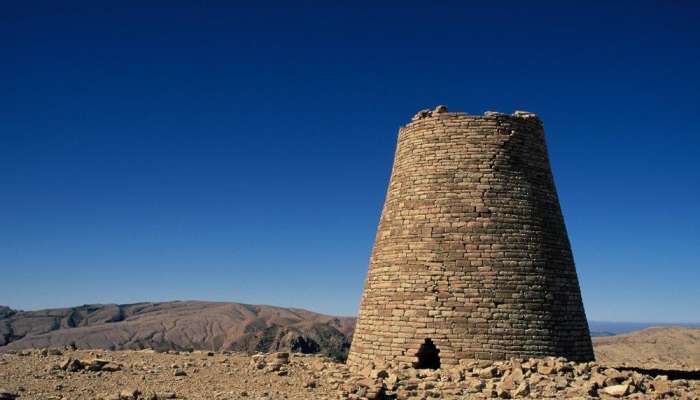
Muscat — Royal Decree No. 62/2026 has been issued, introducing amendments to certain provisions of the Cultural Heritage Law. These amendments reflect the growing importance the Sultanate of Oman places on protecting its tangible and intangible cultural heritage, while enhancing its standing both locally and internationally. The move is part of broader efforts to reinforce the legal framework for safeguarding cultural heritage and consolidating national identity.
A key amendment expands the definition of the “competent authority” to include the Ministry of Heritage and Tourism and the Ministry of Culture, Sports and Youth, each within its respective areas of competence. This ensures institutional integration in the management and protection of cultural heritage in all its dimensions.
The law stipulates that the competent authority shall be responsible for protecting cultural heritage, including its collection, documentation, proper management, preservation, sustainability, and transmission to future generations—recognizing heritage as a cornerstone of Oman’s national identity and civilizational legacy.
The amendments also introduce terminology covering tangible and intangible cultural heritage, as well as movable, immovable, and underwater heritage. A new term, “Omani World Cultural Heritage,” has been coined to refer to sites inscribed or nominated for UNESCO lists, underscoring Oman’s international presence and its commitment to relevant global conventions.
A dedicated chapter on geological heritage has been added. This includes distinctive geological phenomena of exceptional scientific value, such as rock formations, strata, structural and geochemical features, fossils, and meteorites, as well as surface geomorphological features resulting from weathering and erosion.
The law prohibits taking or borrowing samples—whole or partial—from geological heritage except for exhibition in museums and galleries, or for scientific research and studies, and only after obtaining approval from the competent authority. This ensures the preservation of this natural legacy of scientific and national importance.
The law also pays particular attention to meteorites, defined as rocky masses originating from asteroids or solar system planets that have fallen to Earth in various sizes. Clear controls have been established for searching, possessing, or disposing of meteorites, in line with their scientific and heritage value.
To strengthen legal protection for geological heritage, the amendments impose stricter penalties for related violations. In cases of smuggling geological heritage items, penalties include imprisonment for a term of no less than four years and no more than ten years, and/or a fine of no less than RO 20,000 and no more than RO 150,000. Additional penalties apply for unauthorized possession, disposal, or destruction.
The amended law also mandates reporting any archaeological discoveries within no more than 48 hours, and requires the competent authorities to take necessary action within 60 days, ensuring a balanced legal environment for cultural heritage protection.
Furthermore, the amendments provide more precise regulation for licensing heritage-related activities, including the establishment of private museums and heritage galleries, as well as the sale, purchase, or export of heritage artifacts.