Saturday 20 / June / 2026
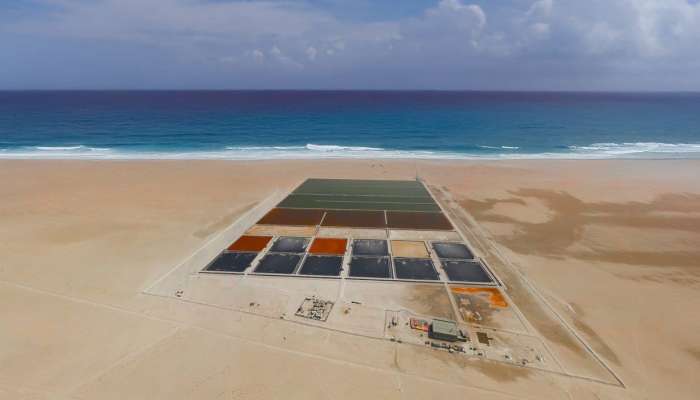
Muscat: Oman’s salt sector has entered a new phase driven by specialised industrial projects, with a clear focus on expanding salt-based downstream industries. The shift includes the production of high-purity industrial salt, food-grade salt, and chemical compounds derived from saltworks such as bromine, caustic soda, soda ash, and polyvinyl chloride (PVC), enhancing the economic value of the resource and creating new industrial investment opportunities.
Current indicators show that export markets account for the largest share of production, reflecting the competitiveness of Omani salt abroad. At the same time, the domestic market continues to grow, supported by increasing demand from key sectors including oil and gas, food processing, and chemical industries.
Data for 2025 indicate that salt production reached approximately 40,000 tonnes, of which around 30,000 tonnes were exported, while local consumption stood at about 10,000 tonnes.
These figures highlight the sector’s growing importance as a promising mining activity capable of supporting industrial and commercial growth, strengthening local content, and providing a solid foundation for the expansion of salt-based manufacturing industries.
The sector’s development is underpinned by four marine salt concession areas along Oman’s coastline in Al Wusta Governorate, backed by investments exceeding US$1 billion. These projects are expected to reach a combined production capacity of around 5 million tonnes annually and support the establishment of related industries. Plans are also in place to offer additional salt concession areas in the future.
Over recent years, the salt industry has undergone a significant transformation in production methods. Modern projects rely on technical studies and detailed analyses of the chemical and physical characteristics of seawater and coastal environments before constructing evaporation ponds designed to maximize efficiency in the production of salt and its derivatives.
Eng. Saud bin Khamis Al Mahrouqi, Director General of Minerals at the Ministry of Energy and Minerals, said industrial minerals, including industrial salt, represent a strategic resource for local, regional, and international markets. He noted that Omani salt possesses competitive advantages that strengthen its position in global markets.
Speaking to Oman News Agency (ONA), Al Mahrouqi said these advantages include product quality, Oman’s strategic geographic location, favorable climatic conditions for natural evaporation, and expanding opportunities in downstream industries. Together, these factors increase the market value of the resource and enhance its contribution to industrial development.
He emphasised that the significance of salt projects extends beyond economic returns to include social and community benefits, particularly in areas hosting production sites. These projects create opportunities for small and medium-sized enterprises in support services, transportation, logistics, and supplies, generating local economic activity that benefits surrounding communities.
Al Mahrouqi added that the projects contribute to regional economic development and strengthen partnerships with local communities in line with the Mineral Wealth Law’s provisions on social contributions, reinforcing the sector’s role in achieving balanced and sustainable development.
He also highlighted Omanisation as a key pillar in the development of the minerals sector, particularly as salt production evolves from traditional activities into technically advanced industries. The projects are expected to generate quality employment opportunities in engineering, geology, operations management, maintenance, quality assurance, safety, and logistics, increasing the participation of Omani talent across the mining value chain.
Salt, whether in the form of ancient rock salt deposits or extracted from marine saltworks, is increasingly recognized as a mineral resource with growing industrial and economic value. This growth is supported by the expansion of mining concession areas, modern projects, and related investments in manufacturing and value-added industries.
Salt ore is considered one of Oman’s promising mineral resources within the broader minerals and downstream manufacturing sectors.
Today, the salt industry stands as an example of how a traditional resource can be reimagined through a modern vision. It has evolved from limited licensing and conventional production into a more advanced industry based on large-scale mining concessions, modern technologies, and integrated extraction, processing, and export activities, thereby enhancing its contribution to economic growth and national value creation.
Rock salt represents one of the oldest geological forms of the resource, formed through the evaporation of water trapped within sedimentary rock layers over long periods. Such deposits can also serve as a source of valuable minerals such as potash, which is increasingly sought after for agricultural and industrial applications.
Surface evaporite salt, meanwhile, forms naturally in arid and semi-arid environments such as salt flats and low-lying basins, where high temperatures and evaporation rates concentrate salts over time. These environments are also considered promising for potash development, with Umm Al Samim Sabkha in Al Wusta and Al Dhahirah governorates among the most notable examples.
Marine saltworks, however, have become the dominant feature of Oman’s modern salt investment landscape. These operations capitalize on the Sultanate’s favorable climate, abundant sunshine, strong winds, and extensive coastal areas, while utilizing modern technologies to enhance productivity and project viability.
Commercial activity in marine saltworks and surface evaporite salt production is concentrated primarily in Al Wusta Governorate, which has established itself as Oman’s leading hub for the industry and currently hosts six mining concession areas dedicated to salt production.
This prominence is attributed to several factors, including vast coastal areas, favorable wind conditions, suitable environments for evaporation ponds, proximity to oil and gas operations, and access to strategic ports that facilitate exports and shipping.
While traditional salt-producing areas remain part of Oman’s economic and social heritage, the sector’s focus today is increasingly directed toward large-scale industrial projects that generate higher value and improve resource utilization.
The salt industry also reflects the Ministry of Energy and Minerals’ core values of credibility, transparency, precision, initiative, innovation, teamwork, and commitment to health, safety, and environmental standards. Many modern salt projects rely on natural solar evaporation, reducing energy consumption compared with other extractive industries.
Some companies awarded mining concessions have also adopted renewable energy sources to power their mining and processing operations, improving operational efficiency, enhancing sustainability, and reducing environmental impacts.
In addition, the design of evaporation ponds according to carefully engineered technical standards helps minimise environmental impacts and support long-term operational sustainability. Projects are required to comply with environmental regulations, monitoring programs, and rehabilitation measures to ensure a balance between economic development and environmental protection, safeguarding the sustainability of this vital sector for future generations.