Saturday 27 / June / 2026
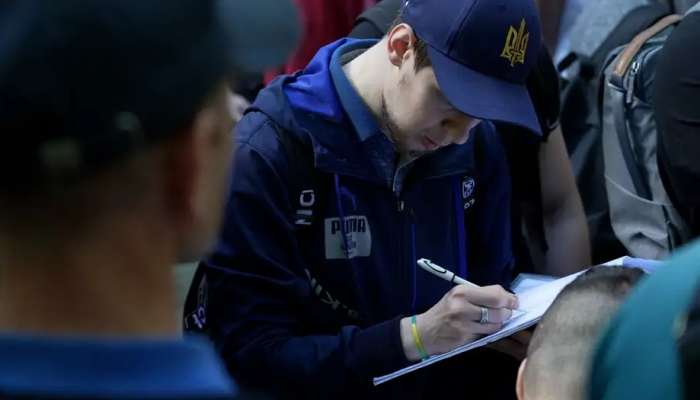
Kyiv: "Our proposal provides that temporary protection should not be granted to newly arriving persons who are not allowed to leave Ukraine because of their military obligations," said Magnus Brunner, the European commissioner for internal affairs and migration, while announcing proposed changes to European protective status for Ukrainians on Friday.
Protection status for Ukrainians as such should remain in place, said Brunner at a meeting of EU interior ministers in Luxembourg in early June, though new conditions could apply.
Ukrainians forced to flee their country as a result of Russia's invasion of their homeland have enjoyed temporary protection status in the EU since March 2022.
That status is set to end in early March 2027, and must now be extended before it expires. The difference between this status and asylum is that the protection is temporary and those entering the bloc are not subject to individual case-by-case review.
Young Ukrainian men face prospect of lower conscription ageThe proposal by the European Commission is formulated in gender-neutral terms, emphasised one EU official. But ultimately, it will most likely affect men between the ages of 23 and 60. The update worked out in the new proposal — which does not apply to Ukrainians already in the EU — would only come into effect when the Council of Europe officially approves and publishes it in the Official Journal of the European Union, underscored another Commission official.
On March 31, the EU's statistics agency Eurostat counted a total of 4.33 million Ukrainians living in the bloc under temporary protection status. Of these, nearly 1.3 million (29.4% of the EU total) were in Germany, followed by 950,000 in Poland (22.2% of the total) and 380,000 in the Czech Republic (8.8%). Slightly more than one-quarter of those in the bloc were adult males, said the agency.
Time for 'more solidarity, not less'
Michael O'Flaherty, commissioner for human rights at the Council of Europe — which is not an EU institution — criticized the proposal. O'Flaherty expressed concern over "mounting pressure to prematurely end temporary protection arrangements" and to limit access for military-age males, among others. The commissioner said that now is the time for "more solidarity, not less."
The EU has justified the new proposal by saying Ukraine had requested the move, and that Kyiv's need to impress military obligations upon its own citizens to defend itself were legitimate. Brunner said Friday that the proposal had been put forth in coordination with EU member states.
Germany, Austria want to see changes
When the issue was discussed at the EU interior ministers' meeting, German Interior Minister Alexander Dobrindt spoke out in favor of removing protection status for military-age Ukrainian males. Dobrindt added, however, that those men should be allowed to apply for asylum.
Austrian Interior Minister Gerhard Karner said that he, too, "very strongly" supported putting an end to automatic protection for military-age Ukrainian men.
Estonian Interior Minister Igor Taro, on the other hand, was skeptical. He suggested the best solution would be to extend the current temporary protection system as-is, with no exceptions, but to engage in discussions with Kyiv.
Why is the EU debating the matter now?
Dobrindt said the current debate was prompted by the pending extension but also by the fact that over the "past few months the arrival of military-age persons from Ukraine has risen."
Ukrainian men between the ages of 23 and 60 are generally prohibited from leaving the country. But although Ukrainians become conscripts from age 18, they cannot be pressed into military service until they are 25. Last summer, Kyiv announced that men between the ages of 18 and 23 could exit the country, which led to a spike in men going abroad.
The discussion isn't new. German Chancellor Friedrich Merz has repeatedly called on Kyiv to bar young men from leaving the country so that they can serve in the military. Visiting Berlin in April, Ukrainian President Volodymyr Zelenskyy stressed that the return of military-age males would also be in the Ukrainian army's interest. He said ultimately, it is a question of fairness.
Now that the European Commission has put forth its proposal, it must be approved by a majority of EU member states. EU ministers have said that in the past, such decisions were made "very quickly."