Sunday 28 / June / 2026
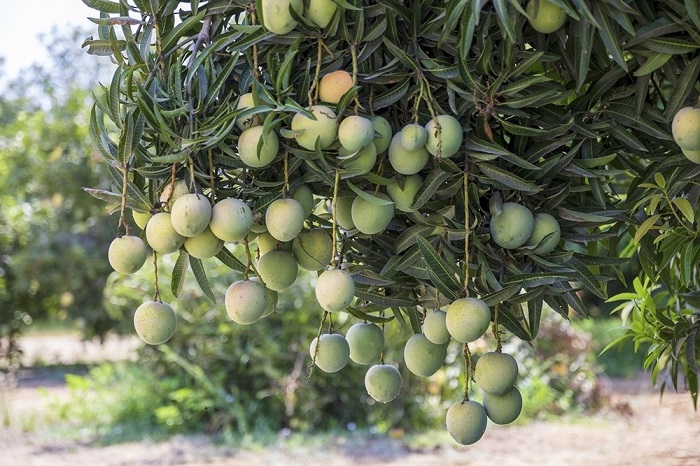
Sohar: The conservation of crop genetic resources has become a fundamental pillar for ensuring the sustainability of agricultural production and reinforcing food security.
Guided by this vision, the Sultanate of Oman has placed significant emphasis on establishing genetic banks for economic crops, viewing them as a strategic investment that safeguards national genetic wealth and paves the way for developing more efficient varieties capable of meeting future challenges.
The Mango Gene Bank at the Sohar Agricultural Research Station stands out as one of the most prominent national research projects. It represents an advanced center for the preservation and conservation of genetic resources for mangoes—one of the Sultanate of Oman’s foremost fruit crops. Its role extends beyond the collection of local and international varieties, serving as an integrated scientific foundation to support research and development programmes, preserve agricultural biodiversity, and enhance the sustainability of production for this promising crop.
The bank houses 252 mango varieties—both local and international—distributed across 708 trees, collected from various governorates of the Sultanate of Oman and from 23 countries well-known for mango cultivation and production. This makes it one of the largest field genetic banks for this crop in the region.
Omani varieties take precedence within the gene bank's holdings, comprising 62 local cultivars that represent a national genetic treasure reflecting the agricultural diversity that distinguishes the Sultanate of Oman. These varieties exhibit notable diversity in fruit shape, size, colour, ripening periods, and marketable characteristics, making them a valuable resource for enhancing local production and increasing its economic value.
The gene bank's function extends beyond preservation; all varieties are subject to continuous scientific evaluation programs to study their productive characteristics, fruit qualities, and tolerance to different environmental conditions. This contributes to the selection of promising varieties for agricultural expansion and serves as the foundation for genetic improvement programmes and the development of new cultivars distinguished by high productivity, excellent quality, drought tolerance, heat and salinity resistance, and resilience to agricultural pests.
The gene bank also serves as an advanced research platform supporting researchers and specialists by providing a rich genetic database utilised in studies related to phenotypic and genetic characterisation of varieties. It leverages cutting-edge technologies such as genetic fingerprinting and artificial intelligence in variety evaluation and trait analysis, thereby enhancing the efficiency of agricultural research and accelerating the development of varieties suited to Oman's environment.
Eng. Mohammed Hamad Al Jabri, Senior Fruit Researcher, stated that the Mango Gene Bank is one of the most significant national projects for conserving horticultural crop genetic resources. He noted that the gene bank has become a scientific reference supporting genetic improvement programmes and the development of new cultivars adapted to Oman's environmental conditions, contributing to increased productivity and improved fruit quality.
In a statement to Oman News Agency (ONA), he explained that the gene bank maintains a broad genetic base encompassing local and international varieties collected from diverse mango-producing environments. This enables researchers to evaluate these varieties and select the most suitable for commercial agricultural expansion, while simultaneously preserving distinctive Omani cultivars and ensuring their sustainability for future generations.
He further indicated that research studies focus on evaluating productive traits, fruit quality, and the tolerance of varieties to drought, heat, salinity, and pests. He affirmed that the results of these studies will positively impact the development of the mango sector, support investment projects, produce healthy, high-quality seedlings, and reduce reliance on imported propagation materials—thereby strengthening national food security.
The gene bank assumes growing importance in the context of climate change, serving as the first line of defense for preserving crop genetic diversity. It provides a genetic reservoir that can be relied upon to develop varieties more capable of adapting to future environmental conditions, thereby enhancing the sustainability of agricultural production and ensuring the continuity of this vital sector.
The gene bank also constitutes an important pillar for supporting agricultural investment by providing promising varieties with economic viability, strengthening the capacities of local nurseries, and enabling farmers to access high-quality propagation materials. This enhances production efficiency and boosts the competitiveness of Omani products in local and regional markets.
The Mango Gene Bank at the Sohar Agricultural Research Station is more than a field containing hundreds of trees—it is a national project investing in the future, preserving the genetic diversity memory of the crop and translating research into practical solutions serving farmers, investors, and the national economy. The ongoing efforts of the Ministry of Agriculture, Fisheries and Water Resources to develop this research institution further consolidate Oman's standing in the field of genetic resource conservation and the development of a more innovative and sustainable agricultural sector capable of addressing food security challenges and climate change. This reinforces a national vision that places research at the heart of sustainable agricultural development and a more competitive agricultural economy.