Tuesday 28 / July / 2026
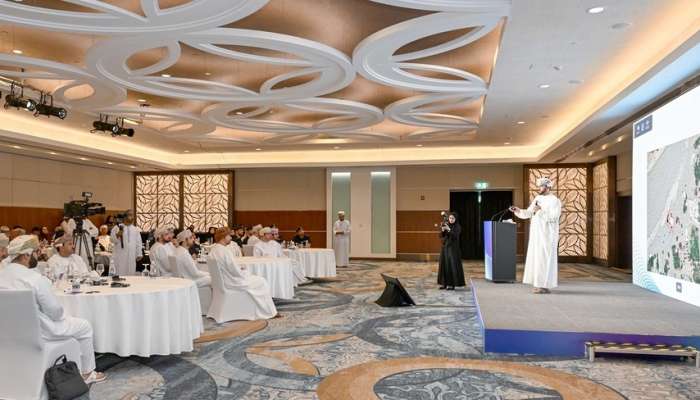
Muscat: The Financial Services Authority organized today a workshop on "Flood Risk Analysis Using Satellite and Drone Technologies," with the participation of representatives from the Civil Defence and Ambulance Authority, insurance companies and brokers, alongside a number of specialists and experts in the fields of modern technologies and risk management.
The opening of the workshop was held under the auspices of Muneer Salim Al Muneeri, Deputy President for Operations at Oman Investment Authority (OIA).
The workshop aims to review the latest technologies and innovative solutions used in flood risk analysis. It also seeks to enhance the readiness of the insurance sector to benefit from satellite and drone technologies in data collection and analysis, damage assessment, and the improvement of underwriting operations and insurance claim settlements, which contributes to raising the sector's efficiency and enhancing its capacity to deal with natural risks.
Ahmed Ali Al Maamari, Deputy CEO of the Financial Services Authority, delivered a speech in which he affirmed that the rapid development in artificial intelligence, data analysis, and remote sensing technologies has brought about a fundamental shift in risk management methods. He pointed out that the insurance sector increasingly relies on accurate data and proactive analysis to make more efficient decisions, which contributes to developing insurance products and elevating the quality of services provided.
He explained that rapid climate changes emphasize the importance of transitioning from dealing with the aftermath of disasters to the early prediction of risks, preparing for them, and mitigating their impacts. He affirmed that adopting modern technologies has become a strategic choice to enhance the readiness of institutions and raise the efficiency of the risk management system.
He noted that the exceptional weather conditions witnessed by the Sultanate of Oman over the past years have highlighted the need to develop more accurate tools for assessing natural risks and to rely on modern technologies in gathering and analyzing data. This enhances the speed of response, raises the efficiency of damage assessment, and supports decision-making based on accurate and reliable information.
He clarified that the applications of these technologies extend to supporting the operations of the Civil Defence and Ambulance Authority, emergency management, urban planning, and infrastructure protection. This enhances integration among national institutions and raises the level of readiness to deal with weather conditions and natural risks.
The workshop included several working papers and technical presentations, in addition to an interactive simulation that showcased the practical applications of modern technologies in flood risk analysis. It also highlighted their role in developing risk assessment practices and enhancing the efficiency of decision-making in the insurance sector.
The workshop concluded by emphasizing the importance of continuing to employ modern technologies in developing the insurance sector and enhancing cooperation between regulatory bodies, technological institutions, and insurance companies, which contributes to building a more efficient system for managing natural risks.
It affirmed that the future of the insurance sector in the Sultanate of Oman is based on innovation, digital transformation, and benefiting from modern technologies by encouraging the adoption of innovative solutions and enhancing partnerships with technology companies. This will raise market efficiency, strengthen the risk management system, and support the targets of Oman Vision 2040 in building a diversified and sustainable national economy based on knowledge, technology, and innovation.