Sunday 15 / November / 2026
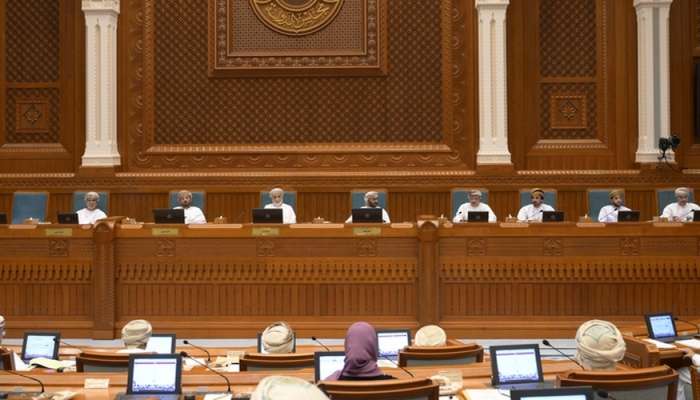
Muscat--- As per the Royal Orders of His Majesty Sultan Haitham bin Tarik the State Council opened today the proceedings of the fourth regular session of the eighth term (2023–2027). This comes pursuant to the provisions of Articles 38 and 41 of the Oman Council Law, promulgated by Royal Decree No. (7/2021).
Sheikh Abdulmalik Abdullah Al Khalili, Chairman of the State Council, delivered a speech in which he stated that the agenda of the first session includes discussing the study submitted by the Education and Research Committee regarding "Scientific Research and Innovation: Priorities and Measuring the Return on Development in the Sultanate of Oman," and the study proposal submitted by the Education and Research Committee regarding "Educational Services Supporting Learning in the Sultanate of Oman: A Legislative and Regulatory Framework to Enhance Equality in Learning Opportunities." The agenda also includes reviewing a number of reports related to the Council's work.
The session discussed the study submitted by the Education and Research Committee regarding "Scientific Research and Innovation: Priorities and Measuring the Return on Development in the Sultanate of Oman." This study highlights the importance of scientific research and innovation as two fundamental pillars for enhancing the knowledge-based economy and supporting sustainable development efforts. It also examines national priorities in this field and ways to measure its developmental return.
Dr. Abdullah Mohammed Al Sarmi, Head of the Education and Research Committee, clarified in the committee's speech that the study aims to analyze the reality of the scientific research and innovation ecosystem in the Sultanate of Oman. It seeks to determine the extent to which scientific research and innovation priorities align with "Oman Vision 2040" and the needs of the economic and service sectors. The study also aims to analyze the pathways for transforming research and innovation outputs into usage and impact, benefit from international experiences and comparative models in measuring the impact and return of scientific research and innovation, diagnose challenges, and propose executive recommendations for the national return.
The Head of the Education and Research Committee added that the study focused on the scientific research and innovation ecosystem in the Sultanate of Oman and its ability to transform investment, capabilities, and outputs into a documentable and measurable impact and return.
It examined legislation, governance, funding, priorities, human resources, data, and pathways for transformation and adoption. Furthermore, it benefited from Gulf and international experiences in identifying the methods used to link funding to priorities, involve beneficiary entities, measure impact, and utilize measurement results to guide decisions.
The session also discussed the study proposal submitted by the Education and Research Committee regarding "Educational Services Supporting Learning in the Sultanate of Oman: A Legislative and Regulatory Framework to Enhance Equality in Learning Opportunities," which the Council approved for adoption within the work plan of the Education and Research Committee during the current regular session.
Furthermore, the session witnessed the review of numerous reports submitted by the members of the Council, as well as the review of the Secretariat General's report regarding the activities of the Council's organs, and the works and programs they implemented during the past period.