Thursday 19 / November / 2026
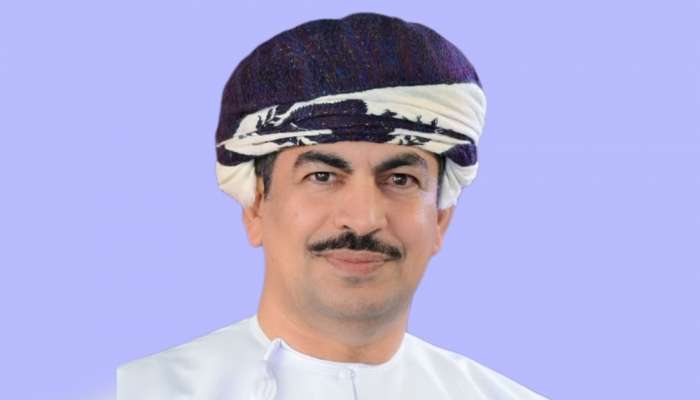
Muscat: Dr. Abdullah Nasser Al Harrasi, Minister of Information, affirmed that the Sultanate of Oman’s march of development has been inspired by a deep-rooted civilizational history and well-established values that have contributed to building the State and safeguarding its unity and stability. He pointed out that pondering over this glorious history offers valuable lessons and insights that serve as guidelines for building the future.
In an interview during the morning programme "Sabah Al Shabab" of Radio Sultanate of Oman—on the occasion of the glorious National Day, the Minister said, “Oman is a nation with roots that extend deeply in history. Its civilization has engaged positively with other cultures, while its strategic geographical location and maritime outreach have contributed to establishing extensive bonds with peoples across the globe.”
The Minister added that the Omani experience has over the ages been linked to principles of organized action, prudence and justice in the management of resources. Citing examples, Dr. Abdullah pointed out that the “Aflaj” system of traditional irrigation serves as a living model of management of resources—noting that Aflaj, being a mechanism of water distribution, is governed by specific rules and schedules that ensure that the rights of all users are protected.
In other comments, Dr. Abdullah said that the 20th of November celebrates the anniversary of Imam Ahmed bin Said Al Busaidi’s accession to power in 1744—the date that marks the establishment of the Busaidi dynasty. It was a significant moment in modern history that saw the founding Imam work prudently towards unifying the nation, revitalizing trade and developing naval fleets—of which set a legacy that has shaped the nation’s march leading up to the prosperous reign of His Majesty Sultan Haitham bin Tarik. He prayed to the Almighty Allah to protect His Majesty the Sultan.
The Minister explained that the values upheld by Omani society—including respect for the nation’s unity and sovereignty and the spirit of sacrifice—all form fundamental pillars of solidarity and stability. He noted that Oman is a nation that boasts a host of profound principles that are highly cherished and constantly passed on to new generations through education and various forms of social upbringing.
Speaking about foreign affairs, the Minister affirmed the Sultanate of Oman’s steadfast commitment to its positions towards issues of justice, notably the Palestinian cause. In this context, he pointed out that the Sultanate has clearly voiced its condemnation of the tragedies and violations committed in Gaza Strip and other Palestinian territories.
He further indicated that the official state visits made by His Majesty Sultan Haitham bin Tarik to friendly countries were in pursuance of Oman’s engagement with other nations and peoples. These visits, he noted, contribute to advancing the Sultanate’s interests, expanding the country’s partnerships and promoting the priorities of Oman Vision 2040 across key themes—including “People and Society”, “Economy and Development”, “Sustainable Environment” and “Governance and Institutional Performance”.
The Minister also highlighted improvements in several economic indicators. He referred to a reduction in public debt, the restoration of Oman’s investment-grade credit rating, a notable rise in the volume of foreign direct investments and constant progress across various national and international benchmarks.
The impact of these accomplishments, he observed, began to manifest in the lives of citizens—through the Social Protection System, which offers various benefits to different segments of society, as well as milestones set in the fields of employment, training, funding (via Oman Development Bank) and the progress made in housing programmes, healthcare, education and infrastructure.
The Minister explained that the Royal inspection visits to different wilayats represent an approach of the Leader’s direct communication with people. These Royal tours, he said, provide a firsthand assessment of citizens' needs. He added that His Majesty the Sultan personally investigates the issues and observations raised by members of the public and, accordingly, His Majesty issues directives to upgrade the services extended to citizens across various sectors.
Speaking about the relationship between the leadership and society, the Minister affirmed trust and affection stem from the leadership’s sincerity and its commitment to shouldering its responsibilities toward society. In this context, he pointed out that Omani Citizen remains the primary focus of all government policies and decisions.
The Minister stressed that Omani media is committed to “Responsible Speech” that bears the ethical weight of communication, fulfills its role in serving Oman and its development and safeguards its identity and its collective memory by spreading awareness about the history of the nation and by conveying its civilized image to the outside world.
The Minister further pointed out that, amid widespread channels of social communication, the responsibility associated with media speech (spoken and written) has become even greater. In this context, he underscored the importance of regulating the use of media, countering hate speech and curbing insults targeting national symbols, cultures and societies.
In his concluding remarks, Dr. Abdullah Nasser Al Harrasi, Minister of Information, called upon Omani youth to develop their capabilities and benefit from scientific, intellectual and technical resources—including artificial intelligence (AI) and modern communication platforms—to hone their skills and contribute to better serving the nation.