Wednesday 25 / November / 2026
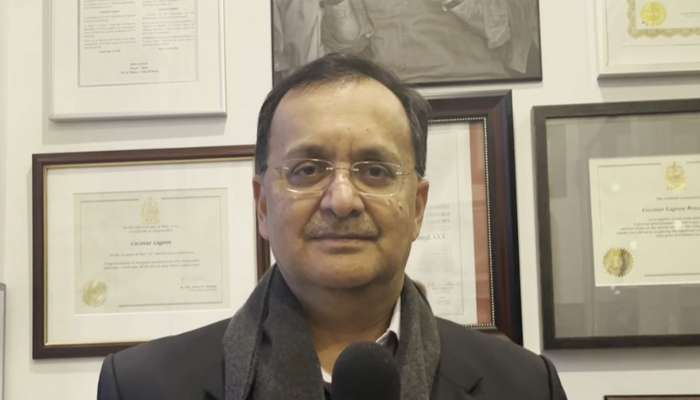
New Delhi: India and Canada are negotiating pacts covering defence, information security and bilateral trade as the two countries seek to rebuild relations following years of diplomatic tensions.
Dinesh Patnaik, India's High Commissioner to Canada, said discussions were progressing on multiple fronts ahead of Prime Minister Narendra Modi's proposed visit to Canada on December 11-12. The two sides are also expected to announce a bilateral trade agreement during the visit.
Patnaik said the proposed defence agreement would cover strategic co-operation, reciprocal port calls, joint training, capacity building and joint production in the aerospace, naval and space sectors.
He described the proposed partnership as mutually beneficial, highlighting opportunities for Canadian companies to participate in India's defence modernisation programme.
Patnaik said he was “hopeful” there would be a “successful negotiation” by the time the visit commences on December 11. Modi will arrive in Toronto that day and travel to Ottawa, the Canadian capital, on the 12th for bilateral engagements, including his meeting with Canadian PM Mark Carney.
The defence framework will encompass the spectrum in the sector, ranging from interoperability, to exchanges, training, procurement and joint production.
"We're looking at early warning and surveillance aircraft, and Canada's Bombardier is the best platform for it. We're looking at seaplanes from De Havilland. We're looking at space co-operation," Patnaik said.
He also identified opportunities for Canadian and Indian companies to collaborate in ammunition and missile-related manufacturing, including the production of 155-mm artillery shells, shell casings, missile guidance systems and control systems.
The two countries are also negotiating an information-security agreement that would enable the exchange of sensitive, classified and advanced technology-related information while ensuring adequate safeguards. Patnaik said such a framework would be essential for joint weapons development and the transfer of sensitive technologies.
Strengthening security co-operation
India and Canada are working to transform their periodic exchanges between National Security Advisers into a more institutionalised mechanism for sustained co-operation.
Patnaik said improved communication had helped both sides develop a better understanding of each other's concerns. He also pointed to co-operation on immigration enforcement, noting that nearly 5,000 people had been deported from Canada for visa violations.
The Khalistan issue, which has been a major source of friction, is also seeing a shift in the bilateral dialogue. Patnaik said Indian security agencies had previously suspected that Canadian authorities were supporting separatist elements. However, he said New Delhi now better understood that Canada's position was shaped by its legal protections for freedom of expression rather than direct support for separatism.
Relations deteriorated sharply in 2023 after then Canadian Prime Minister Justin Trudeau linked Indian agents to the killing of Khalistani separatist Hardeep Singh Nijjar. The allegations led to diplomatic expulsions and retaliatory measures by both countries.
Since Mark Carney became Prime Minister, New Delhi and Ottawa have pursued efforts to restore diplomatic engagement and expand economic ties.
The renewed engagement also comes amid global trade tensions and uncertainty over US President Donald Trump's tariff policies. Both countries are seeking to diversify partnerships and strengthen co-operation with other middle powers.
The proposed trade, defence and security agreements could therefore mark a broader strategic reset, extending India-Canada relations beyond conventional economic engagement.