Sunday 14 / December / 2025
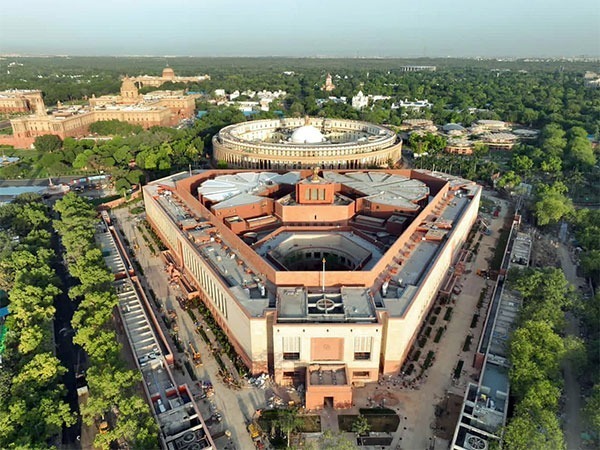
New Delhi: In the past decade, democracies across the world have experienced heightened political volatility, marked by frequent leadership changes, fractured mandates, and policy reversals. Amid this era of democratic volatility, India stands out as a rare exception.
With over a decade in office, Prime Minister Modi is now among the longest-serving elected leaders in the democratic world. Under his leadership, India has witnessed uninterrupted executive leadership for over a decade, even as major global powers and neighbouring states cycled repeatedly through their top leadership.
Major democracies and repeated leadership change
In the United States, Barack Obama served as president from 2009 to 2017, followed by Donald Trump from 2017 to 2021, then Joe Biden from 2021 to 2025, and subsequently Donald Trump again from 2025 after the 2024 election.Each transition brought sharp shifts in policy priorities and governing style.
The United Kingdom experienced even greater churn. Since 2014, Britain has had six prime ministers, beginning with David Cameron, followed by Theresa May, Boris Johnson, Liz Truss, Rishi Sunak, and now Keir Starmer. The Brexit period transformed leadership change from an exception into a recurring feature of British governance.
Australia also saw repeated changes at the top. Tony Abbott served until 2015, Malcolm Turnbull governed from 2015 to 2018, Scott Morrison led the country from 2018 to 2022, and Anthony Albanese assumed office in 2022. In just a decade, Australia cycled through four prime ministers, limiting long term policy continuity.
In Europe, Italy moved through five prime ministers between 2014 and 2024, from Matteo Renzi to Paolo Gentiloni, Giuseppe Conte, Mario Draghi, and Giorgia Meloni, largely due to fragile coalition arrangements. France experienced fewer leadership changes, shifting from François Hollande to Emmanuel Macron, yet still faced prolonged political strain and social unrest during the same period.
From long tenures to rapid turnover
Japan’s experience since 2014 highlights how even traditionally stable systems faced leadership churn. Shinzo Abe served continuously from December 2014 to September 2020, amassing over 3,100 days in office, but after his exit, turnover accelerated. Yoshihide Suga governed for just over a year, Fumio Kishida served from 2021 to 2024, and Shigeru Ishiba’s tenure was marked by extremely short terms and an eventual resignation within a year after electoral setbacks. Japan has since elected Sanae Takaichi as its first woman prime minister, reflecting a clear shift from long-term stability to frequent leadership transitions.
Even countries known for institutional stability did not remain static. In Canada, Stephen Harper served until November 2015, after which Justin Trudeau governed for nearly a decade from November 2015 to March 2025, completing 3,418 days in office, before stepping down and handing over to Mark Carney. These orderly transitions still underline how rare uninterrupted executive continuity has become.
Nepal experienced extreme political churn after 2014, recording ten prime ministerial terms and nine leadership changes when repeat oaths, minority governments, and interim arrangements are counted separately. Beginning with Sushil Koirala in February 2014, power rotated repeatedly among KP Sharma Oli, Pushpa Kamal Dahal, and Sher Bahadur Deuba, with Oli alone taking oath four times between 2015 and 2024, including a brief 60-day minority government in 2021. This cycle continued until Sushila Karki assumed office as interim prime minister, underscoring how leadership instability became a defining feature of Nepal’s post-2014 politics
Sri Lanka’s leadership changes were crisis-driven, shifting from Maithripala Sirisena between 2015 and 2019 to Gotabaya Rajapaksa from 2020 to 2022, followed by Ranil Wickremesinghe until 2024, before Anura Kumara Dissanayake assumed office.
While leadership changed repeatedly across major democracies, India showcased remarkable political continuity at the back of economic and social transformation. PM Modi remained in office throughout the entire period, supported by popular electoral mandates. This continuity allowed India to plan and govern beyond short electoral cycles. Policies were carried forward rather than reversed, infrastructure projects moved from conception to completion, and foreign policy followed a consistent strategic direction.